Tell us what has changed in the room
Did the marks appear after a pipe repair? Does the same corner keep feeling damp? Those details give us a more useful starting point than the color of a stain. We ask about the water history and look at the materials around the visible area.
A smell on its own cannot tell us how far a problem extends. Appearance also does not identify a mold species. We explain what the site assessment shows and when a separate specialist assessment may be useful.
Why the work area may need to be separated
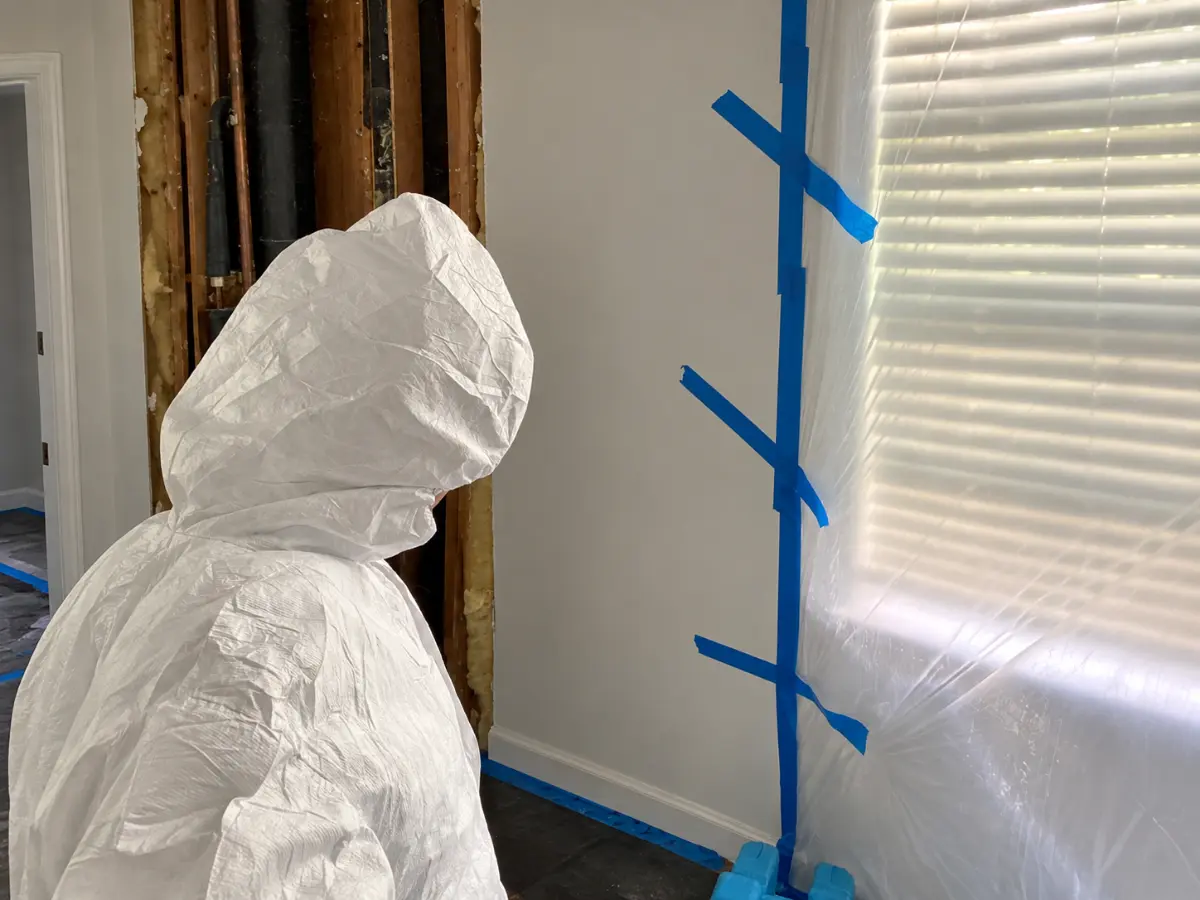
Removing or cleaning an affected material can disturb what is on it. Depending on the job, the remediation plan may include containment to separate that work from the rest of the home.
We explain where that boundary will be and what access needs to stay restricted. The plan is based on the area being worked on, including how it connects to adjoining rooms. The aim is to manage the work area, not simply put plastic around a stain.
The moisture source needs its own answer
If the same leak is still feeding a wall, cleaning its surface will not resolve that water problem. We discuss whether the source has been repaired and whether damp materials still need drying.
The EPA identifies moisture control as central to managing mold. Where water damage is part of the job, we coordinate the drying plan with the remediation scope. We also explain which source repairs need to be arranged separately.
What will be cleaned, and what may need removal?
The answer depends on the material and the extent of the affected area. A surface that can be reached and cleaned presents a different job from affected material inside a wall. We explain the proposed approach after assessment.
If you already have an inspection report, share it before the scope is agreed. Any separate testing or independent verification should be discussed at that point, so you know what is included before work starts.
Planning around the people living at home
A work area beside a hallway can affect the way everyone moves through the house. Before work begins, we discuss which spaces need to remain clear and whether normal use of the home will be affected.
The cost follows the actual work: access to the affected material matters, as does the way the area must be handled. We explain the proposal after seeing the property. If someone has personal health concerns, those should be discussed with a qualified healthcare professional.
When the room is still wet or full of belongings
Remediation and drying can be connected parts of the same loss. If a damp floor remains beside the affected wall, we discuss how those tasks fit together.
When furniture prevents access, we can coordinate moving it out of the work area. Temporary storage is an option to discuss if there is no suitable space elsewhere in the home. We do not add services just because they appear on a list.