The pipe is fixed, what happens to the wet floor?
A supply line can be repaired in one visit while moisture remains beneath the flooring beside it. The wet patch you can see is only a starting point. We inspect the adjoining areas and take readings in the materials that may have absorbed water.
Tell us when the leak was discovered and which rooms feel damp. Photos from before the plumbing repair can help explain where the water started. If water is close to electrical equipment or a ceiling is sagging, keep out of that area and seek emergency help when there is an immediate danger.
Standing water comes out first
An air mover does not replace extraction. When water is still sitting on the floor, the first job is to remove what can be reached. We then check the materials that remain wet and decide where drying equipment belongs.
A floor can look better after extraction without being ready to put back into normal use. We explain which areas still need drying and whether access to any part of the room needs to stay clear.
The readings decide where the equipment goes
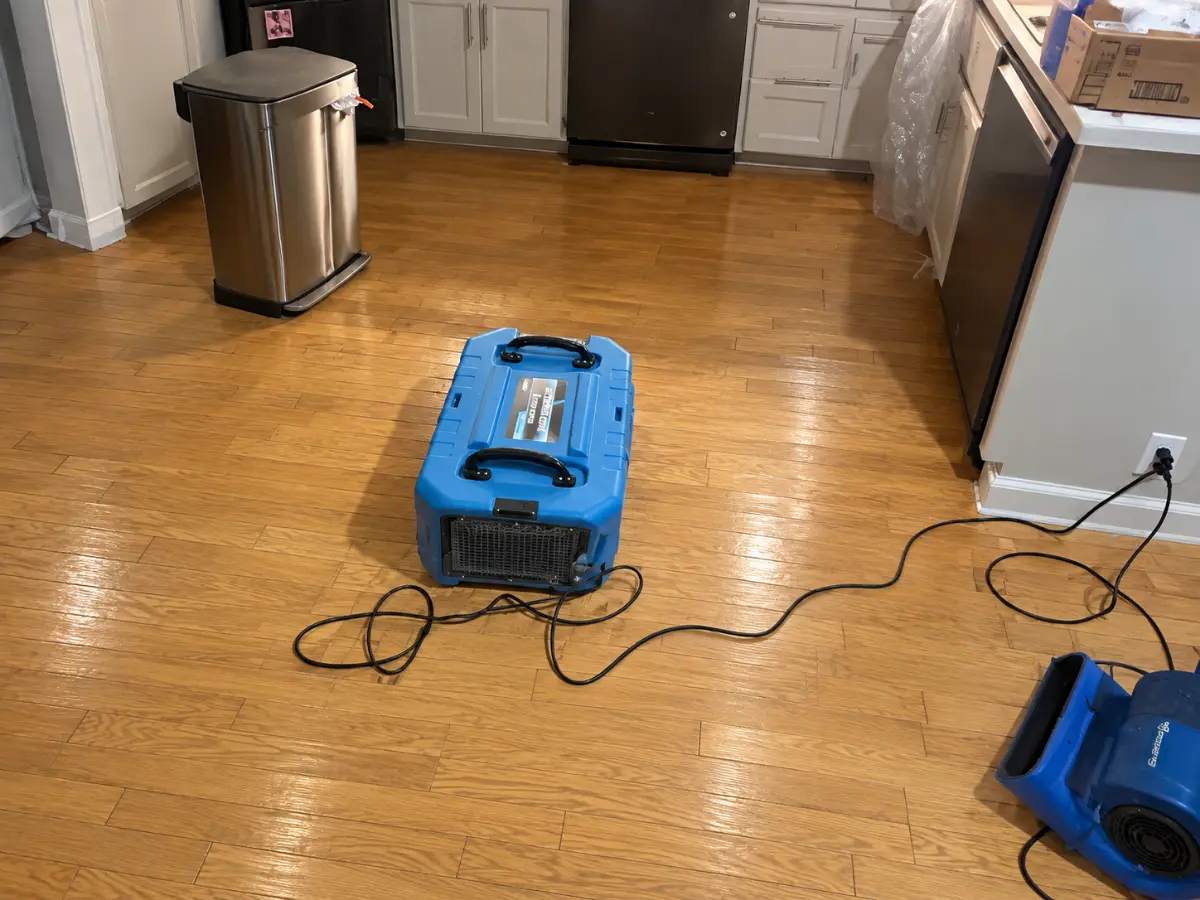
We record baseline moisture levels before setting up the drying equipment. An air mover carries air across damp surfaces; a dehumidifier removes moisture from that air. The setup is planned around the affected materials and the room's layout.
During the job, we return to check the readings and adjust the setup. We do not finish drying just because the top of the floor looks dry. The condition of the materials and their readings determine when that phase can end.
How soon can you get here, and how long will drying take?
We offer arrival within 3 hours when service is available for your address. Call (408) 385-4892 and tell us where the property is. We will give you an arrival estimate based on the response we can arrange.
Drying time is a different question. A small wet area can still need attention beneath the finish, while another job may be easier to access. After inspection, we explain the equipment plan and the proposed cost. We review progress with you rather than assigning a finish date from a photograph.
Keep a record before anything is thrown away
If you can safely take photos before materials are moved, keep them. The point where the leak began and the rooms the water reached can be useful when discussing the loss with your insurer. We document the mitigation work and provide a final drying record.
Our team can help you understand what to document, but your insurer decides coverage. Check the notification requirements in your policy and meet those deadlines while the restoration work is being arranged.
What if the room needs more than drying?
A heavy cabinet may block access to a wet wall. Belongings may need to be moved while the room is worked on. We can discuss pack-out and temporary storage when access requires it.
If mold is found or suspected, we assess that part of the job separately. We explain which work is included in the drying plan and what needs its own scope before you agree to proceed.